Aircraft Development Cost Calculator

Aircraft Development Cost Calculator Aircraft Development Cost Calculator Based on the Eastlake Model (Modified DAPCA-IV for General Aviation Aircraft) Aircraft Specifications Max Take-Off Weight (kg): Maximum Level Airspeed (KTAS): Number of Planned Aircraft: Production Period (years): Number of Prototypes: Airframe Material: Aluminum (0% Composite)25% Composite50% Composite75% CompositeFull Composite (100%) Certification and Configuration Avionics Certification: LSAPart […]
Aircraft Design
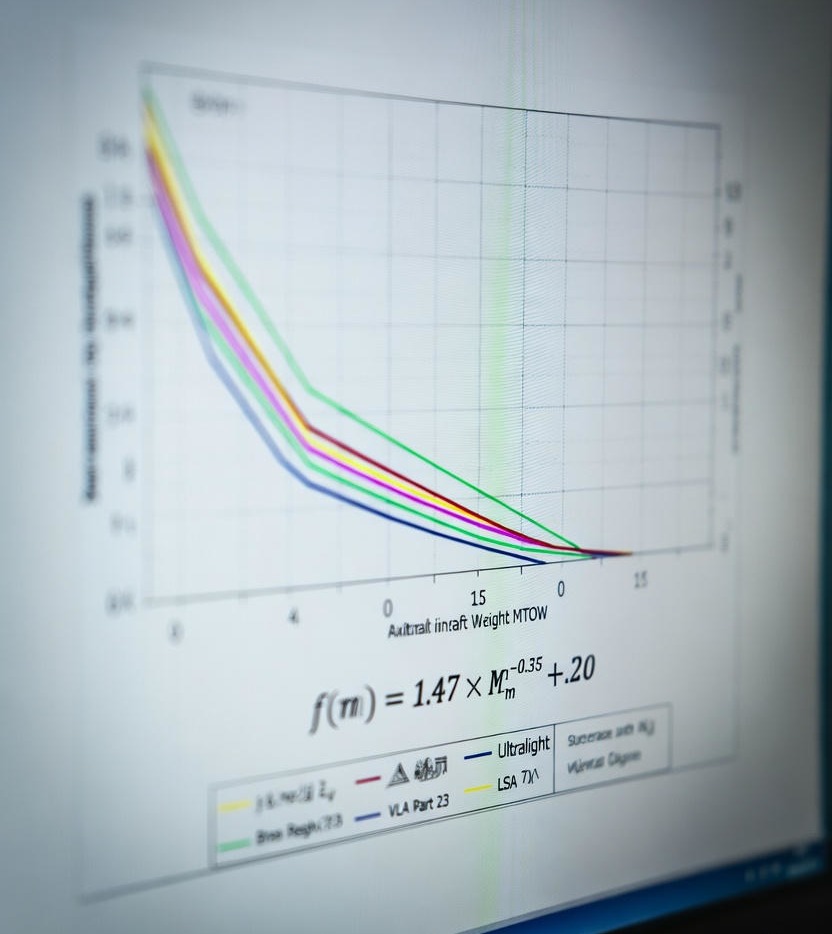
Empirical-Modeling-of-Structural-Weight-Fraction-in-Small-Aircraft.jpg

Empirical Modeling of Structural Weight Fraction in Small Aircraft: A Power-Law Approach for Ultralight, LSA, VLA, and Part 23 Categories

Abstract In aircraft design, the structural skeleton weight fraction—defined as the ratio of the primary airframe weight (including wings, fuselage, empennage, and landing gear) to the maximum takeoff weight (MTOW)—plays a critical role in preliminary sizing and performance estimation. This article derives and analyzes an empirical equation, f(M)=1.47×M^(−0.35)+0.20, where M is MTOW in kilograms, fitted

Blog
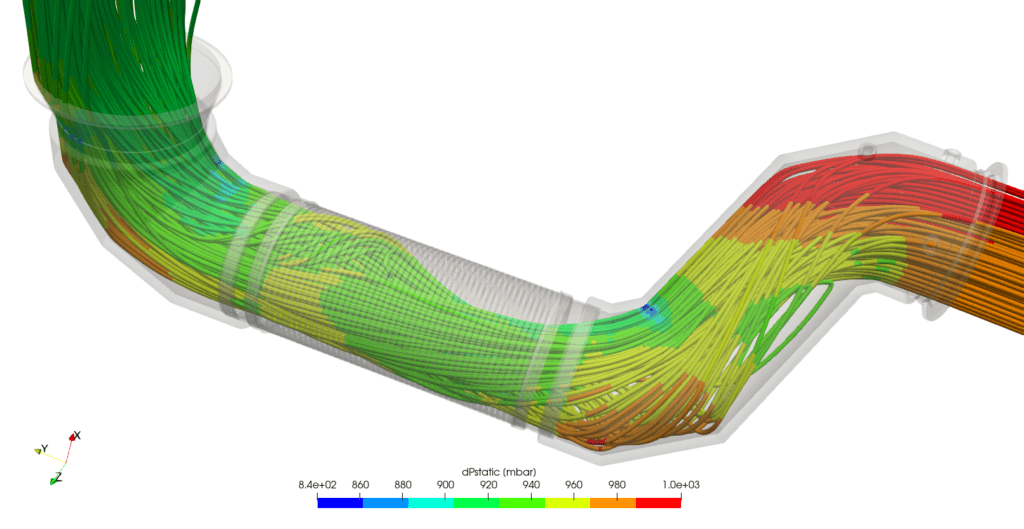
Fluid flow simulation of a charge air pipe

Typical Process of a CFD Simulation

Computational Fluid Dynamics (CFD) is a computer-aided method used to simulate fluid flow in both closed and open systems. CFD allows engineers to predict and analyze the behavior of gases and liquids within a virtual model, accelerating the development of new products and making the process more cost-efficient. A typical CFD simulation process involves creating

Blog
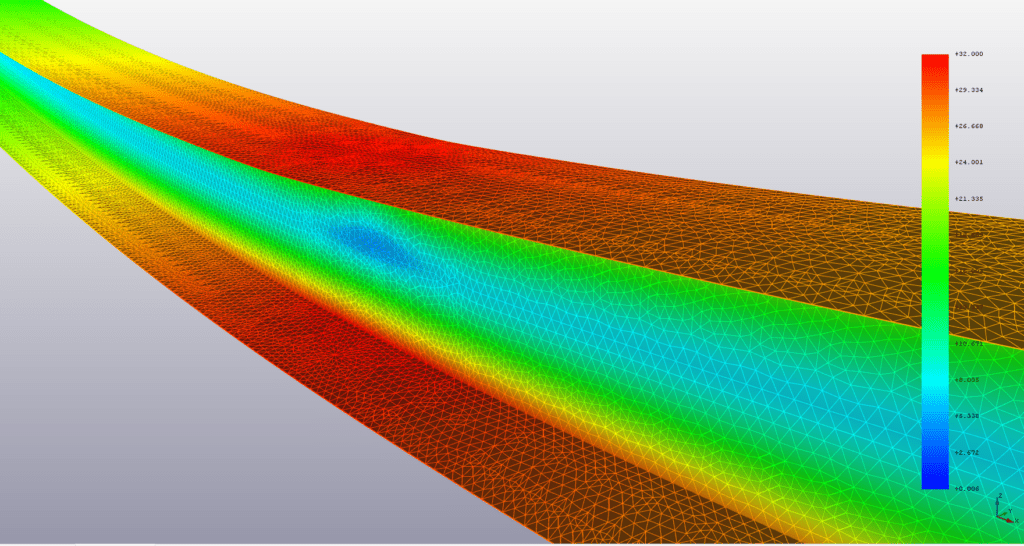
What is Structural Analysis (FEA) and where is it used?

What is Structural Analysis (FEA) and where is it used?

Structural analysis, also known as Finite Element Analysis (FEA), is a powerful computational method used to predict the behavior and load-bearing capacity of structures under various conditions. This technique enables engineers to assess and refine designs before physical prototypes are built, ensuring optimal performance and safety. FEA is applied in numerous industries, including mechanical engineering,

Blog
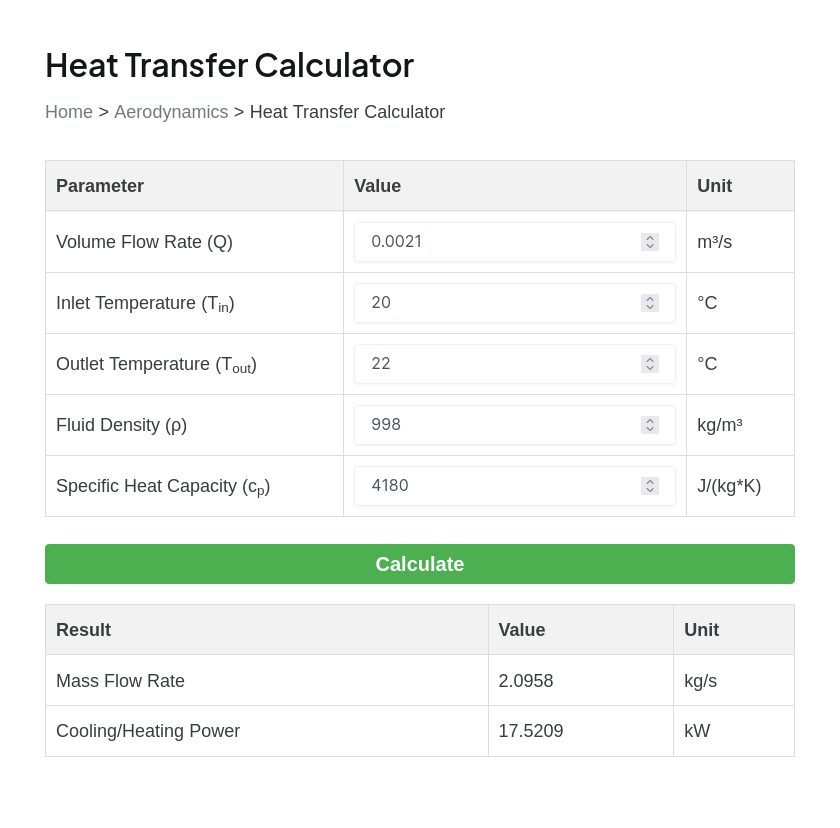
Heat Transfer Calculator

Heat Transfer Calculator

Parameter Value Unit Volume Flow Rate (Q) m³/s Inlet Temperature (Tin) °C Outlet Temperature (Tout) °C Fluid Density (ρ) kg/m³ Specific Heat Capacity (cp) J/(kg*K) Calculate Result Value Unit Mass Flow Rate kg/s Cooling/Heating Power kW

Aerodynamics
Scroll to Top